The Upaya of Short Retreats
The dharma teachings usually say that solitude is actually positive for you. Because it’s a time to connect more deeply with ourselves. It’s an opportunity for what we call meditation, for working with our mind both physically and mentally. Solitude can rejuvenate your mind and recharge it.
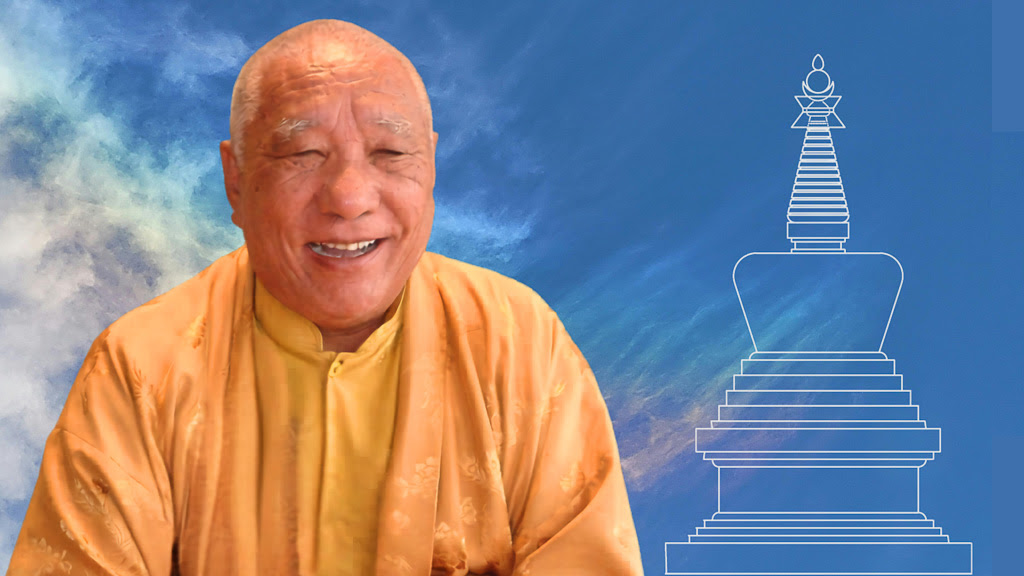
As Rinpoche says, personal retreats can be deeply nourishing. They can help us deepen our practice, improve our understanding of the Buddhist teachings, clarify any questions or doubts, and (re)connect with our own path. When we consider personal retreat practice, many of us think of long periods in retreat centers, cabins, or monasteries.
Long retreats are a precious opportunity to dive really deeply into practice, and if you have the opportunity to spend weeks or months in retreat, by all means do it. But sometimes life does not allow that. We may have restrictions due to work, family obligations, or financial constraints. That can lead us to not doing any retreat at all.
Recently, after I had just finished another three-day solitary retreat, a friend asked what I get out of doing short retreats. We ended up having an inspiring discussion around why it does not always have to be a long retreat or nothing. Since I have found that doing short retreats can be extremely beneficial, I wanted to share some of my experience.
The Quiet Depth of Short Retreats
I have found that even a short retreat—a long weekend, three nights away—can be surprisingly profound. By the end of my last three-day retreat, I felt as though I had been away for two weeks. In some ways, I get more out of short retreats than longer retreats. Something settles deeply and naturally.
Setting an intention before a retreat is important. Of course, that will include connecting with the heart of bodhicitta and the wish to benefit others. I have also found it helpful to spend some time getting clear about what I want to focus on during the retreat.
Do I have doubt in a particular area of the path? Is there some place where I do not feel fully connected? What have I neglected for a while? Is there a particular topic I would like to study or go deeper into? Which practice(s) will be of most benefit during this time?
Short retreats can create enough quiet that we can finally hear what has already been there beneath the daily noise for a while. I am often surprised by what comes up.
Choosing Duration and Location
Solitude is not the absence of company, but the absence of distraction.
— Anonymous
Three nights, for me, seems to be a sweet spot. One or two nights often feel too brief to fully arrive and settle. Three nights allow enough time for the mind to begin slowing down and softening into practice.
One thing I strongly recommend: Avoid doing retreat at home.
Home may seem convenient, especially for a short retreat, and it does save money. But home is often filled with invisible hooks that pull at our attention: unfinished tasks, daily habits, pets, , laundry, books to be read, the subtle momentum of our daily identity. My mind can find many distractions just by being in the environment of my home.
For short retreats, I like to find a place one or two hours away—close enough that travel does not consume too much time, yet far enough that my mind and body feel like we have entered different territory.
Cabins in nature are wonderful for this. Simple rented rooms, retreat centers, or even a friend’s empty apartment can work beautifully. The important thing seems to be separation from our ordinary routines.
Emptying the Mind
Know this life to be like a dream. See the mind’s unborn nature. Aspire to be of benefit to others.
Before leaving for the retreat, I try to finish any open projects. If something cannot be completed, I write a reminder for when I come back. A simple to-do list for later can be surprisingly liberating. Once tasks are written down, my mind no longer needs to keep rehearsing them.
Of course, during retreat itself, there should be no internet, computer, or phone use—unless, for example, you are participating in an online feast. If you have family responsibilities or other circumstances that require you to remain reachable for emergencies even during retreat, I recommend choosing only one channel—perhaps text messages—and checking it only once a day. The rest of the time, place the phone entirely out of sight. I have noticed that my mind gets pulled away if the phone is in the same room, even if it is muted. If you need a clock during retreat, bring one rather than using your phone.
Slow Transitions In and Out
Clarity and decisiveness come from the willingness to slow down, to listen to and look at what’s happening.
We can extend retreat and slow our mind even before we arrive at our retreat destination.
Whenever possible, I avoid highways and take smaller roads instead. I slow down intentionally. Sometimes I stop somewhere beautiful along the way and simply sit quietly for a few minutes. This gradual transition helps me unwind before formal practice even starts.
And when retreat ends, I try to do the same thing in reverse. Instead of rushing immediately back into speed and noise, I allow space and time to return to my daily life. I often intentionally choose a road back home that I have not driven before and may stop at a local shop or restaurant and enjoy the newness and freshness of that experience.
Do I Need a Schedule?
Nobody is going to check what you do, but as Dzogchen Ponlop Rinpoche recommends and as we experience in Nalandabodhi retreats, a schedule will be helpful. Ideally, I plan for four sessions a day and stick to it. Try not to become too loose and think it does not matter if you move things around or start the afternoon session an hour later. I have found that fussing with the schedule can negatively affect the flow and intensity of the retreat. It is good to remember that traditions of scheduling four sessions a day, for example, exist for a reason. We will benefit if we follow these guidelines.
Use All the Time
The whole world and its inhabitants are impermanent.
In particular, the life of beings is like a bubble.
Death comes without warning, this body will be a corpse.
At that time, the dharma will be my only help. I must practice it with exertion.
Besides four practice sessions a day, there is so much time, even in a short treat, to read, study, contemplate, write, or go for a walk outside. The hours seem to stretch, and I have noticed many times how long the days in retreat feel.
Between meditation sessions, I often journal or reflect quietly on the themes I brought into retreat. Sometimes I take a contemplative walk in nature. Other times I simply sit outside with a question and allow it to deepen on its own. Questions that feel tangled in ordinary life sometimes begin to open naturally in the spaciousness of retreat.
I keep meals intentionally simple. Retreats have taught me to appreciate the pure taste of uncomplicated food.
Don’t forget the lineage and blessings! Connecting with the lineage outside the meditation sessions helps to blend my meditation practice and my mundane mind more and more. I sing dharma songs, recall the lineage while doing a walking meditation, or bring moments of devotion into my ordinary activities.
Working with Our Habits
When emotions come up, mind the gap. First feel them, then hold still without reacting, and then look—look at the gap.
Retreats are a wonderful opportunity to work with any habits, and I sometimes set the intention to work with specific ones. Like tuning the strings of a guitar, we should try for the right balance—neither two strict nor too loose is the ideal way. If you’re like me and sometimes push or try too hard, you might want to loosen up and focus on relaxing more. If you are more on the lazy side, you may want to consider how to perk up a bit.
Figuring out how to work with our habits is part of the process. For example, many of us have a small addiction to coffee or sweets. During retreat, you could choose to go without coffee or sweets (or whatever you’re drawn to), see how your mind reacts, and work with whatever craving arises. Or, you could intentionally bring coffee and sweets with the intention of paying close attention to the arising, abiding, and ceasing of your cravings when you consume them—or when you don’t. I have found both approaches to be quite insightful and even transformative.
The good thing is—there is no one judging you. It is simply about being honest with yourself.
Returning to Daily Life
After the slow drive home, once back in ordinary, daily life, how can I carry some of the retreat energy and insights with me?
Can I offer more presence to a friend, a parent, a stranger? Can I bring a little more patience into conversation? Can I listen more carefully? Can I bring my life and the dharma into closer integration?
Perhaps there is one small habit we have released, or one small habit we can carry forward. A pause before reacting to an email. A moment of awareness while making tea. A sincere conversation we might otherwise have avoided.
I have already scheduled my next short retreat—and I can’t wait.
Checklist: Things to Consider for Short Retreats
- Short retreats are not a replacement for longer retreats, but they are precious.
- Ideally, commit to at least three nights.
- Try not to do retreat at home.
- Set your intention clearly.
- Prepare ahead of time.
- Allow for a slow transition into retreat.
- Make a schedule and stick to it.
- Don’t forget the lineage and blessings.
- Use the time well.
- Come out of retreat slowly.

Brigitte Lause has been practicing Buddhism for more than twenty-five years and became a student of Ponlop Rinpoche in 2002. Originally from Germany, she spent several years in Asia and the US and now lives in Halifax, Canada. With a background in languages and project and event management, she enjoys working in multicultural environments across countries. She regularly serves as a German translator for the Nalandabodhi sangha. Brigitte loves being in nature, and she found her favorite meditation spot on the rocks looking over the Atlantic.